Originally written 1/13/2016
Edited version here (for publication and posting at the garden)
Added carrots photos below 3/28/2022.
Note. Our garden changed its name to Down to Earth Garden on July 1, 2020. The following is information referring to our garden by its previous name, Children’s Garden.
There is 1/2 block of green space on 12th Street between Ave A and B in NYC. El Sol Brillante, Sauer Park (a landscaped children’s playground), and the Children’s Garden at the corner of Ave B.
El Sol Brillante started in 1977. I became a member in 1980 and there was a little black compost bin in the back that maybe 5 or so people used to compost their food waste.
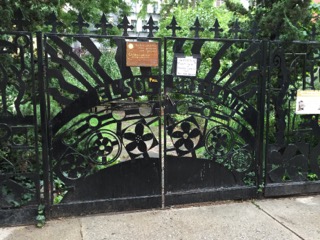
In 2008, the city stopped recycling the leaves. Many leaves fall at Sauer Park, about 100 bags. We did not want the leaves to go to landfill. We asked the Parks Dept if we could build a compost bin for the leaves and they said, “Absolutely not. Don’t you know there is a rat epidemic?” We asked if they could bring a chipper to chip and spread leaf mulch back to landscape? They said no because someone could get hurt with the chipper and then they would get sued. So we dragged the bags into the Children’s Garden to store until spring.


Spring of 2009 El Sol had a huge pile of brush in the back and there was a rat epidemic in the garden . The ground looked like it was moving from the packs of rats running around. We decided to take action. A member found recycled wooden crates from a tile place and put wire mesh in to rat-proof them. The garden bought a chipper and an Urban Tumbler. We had a compost team and chipping team.
A friend who runs the cafe across the street had just hired Action Carting to cart her food waste away and I asked her if we could use the food waste. She said, “Yes. It would be great to give it to the community, any time.” We had the browns and now enough food waste to begin composting. We called the Lower East Side Ecology Center and they came and gave a workshop in composting. We put 50% browns and 50% greens into the Urban Tumbler and let it sit for 1 week. When we opened it everyone would leave the garden cause of the smell and the mothers in the park would check their babies diapers. We then layered it into the compost bins with leaves and turned every week. It was extremely labor intensive and composting was not popular in the garden.
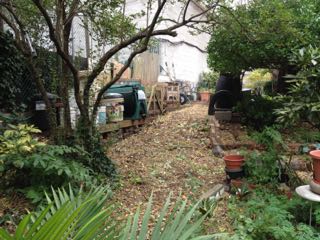
In the fall of 2009 the “Network DIVA” Debra Italiano sent me info about bokashi. I was very intrigued. The system is as follows: Air tight container, you can put all food waste in, including meat and dairy. As you put food waste in the bin you sprinkle wheat bran that is inoculated with microorganisms. When it gets full, close top and let ferment for 2 weeks. Then bury in the ground! It looked so easy and the idea of burying food waste in the ground with the rat phobias and epidemic seemed crazy. I spoke to Shig about the rat problem and he said he heard that rats don’t like fermented food waste. A little adventure and risk, lets go for it! I made an agreement with Shig that we would experiment very carefully and if the rats went after the food waste we would end the experiment.
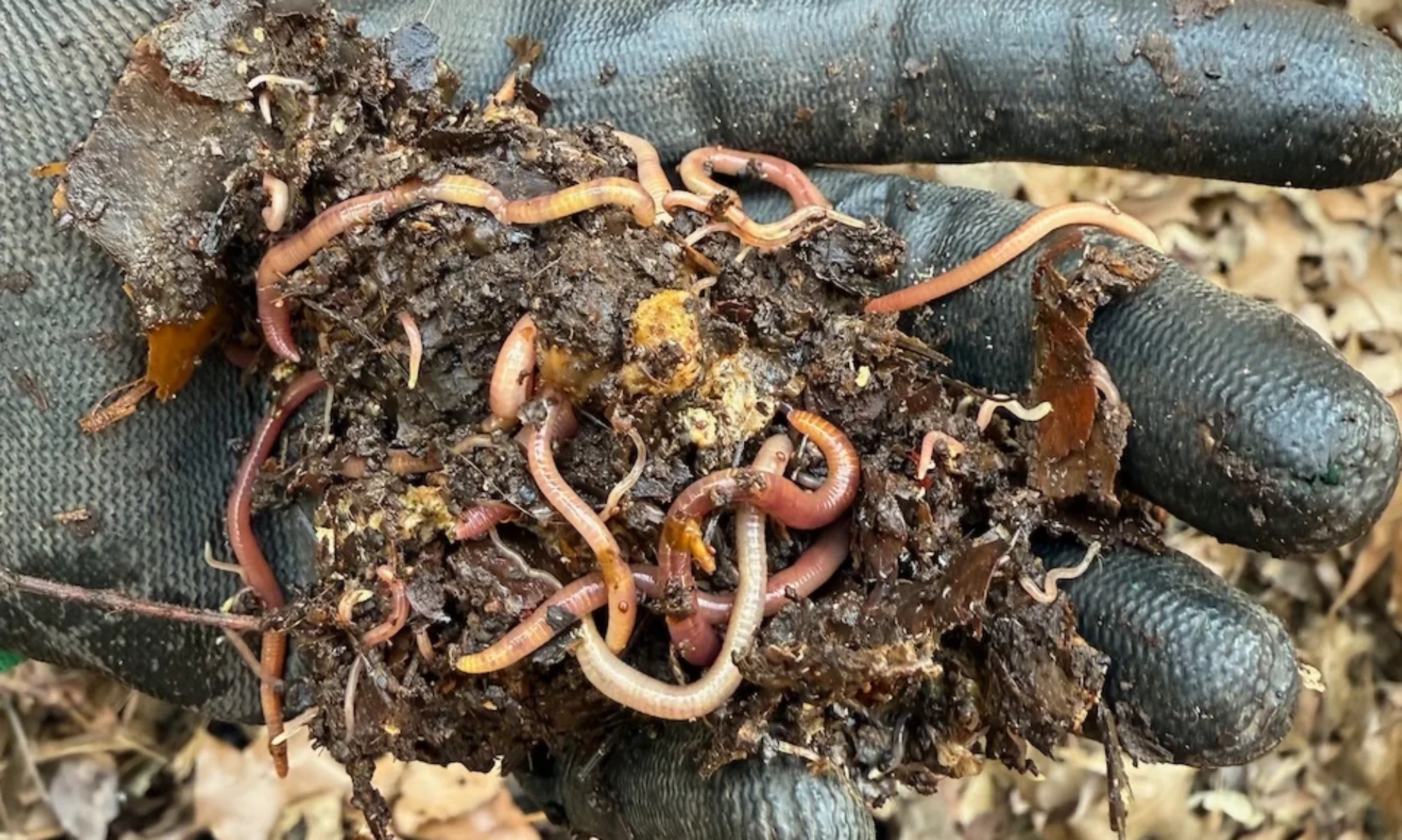
At that time, no one was at the Children’s Garden. There were some plastic bags at the garden that we used to ferment the food waste from the cafe. We buried the fermented food waste and watched every night. They did not go for it, just pulled big pieces out. At El Sol we put fermented food waste in compost bins and saw that the rats were nesting for warmth. There was too much activity, and we put it into the Urban Tumbler. Come Spring when we opened the Urban Tumbler to our surprise we found millions of worms! We then started worm bins. We never have to buy worms; we give them away. The mixture of fermented food waste, leaves, and soil explodes the worm population.

Rats just ripped a small hole, but otherwise, left it alone.
The rats left 12th Street for 3 1/2 years. They don’t like fermented food waste. Recently a few have come back because of multiple construction in the neighborhood.
We have done many experiments over the years. These are the ones related to recycling food waste with bokashi.
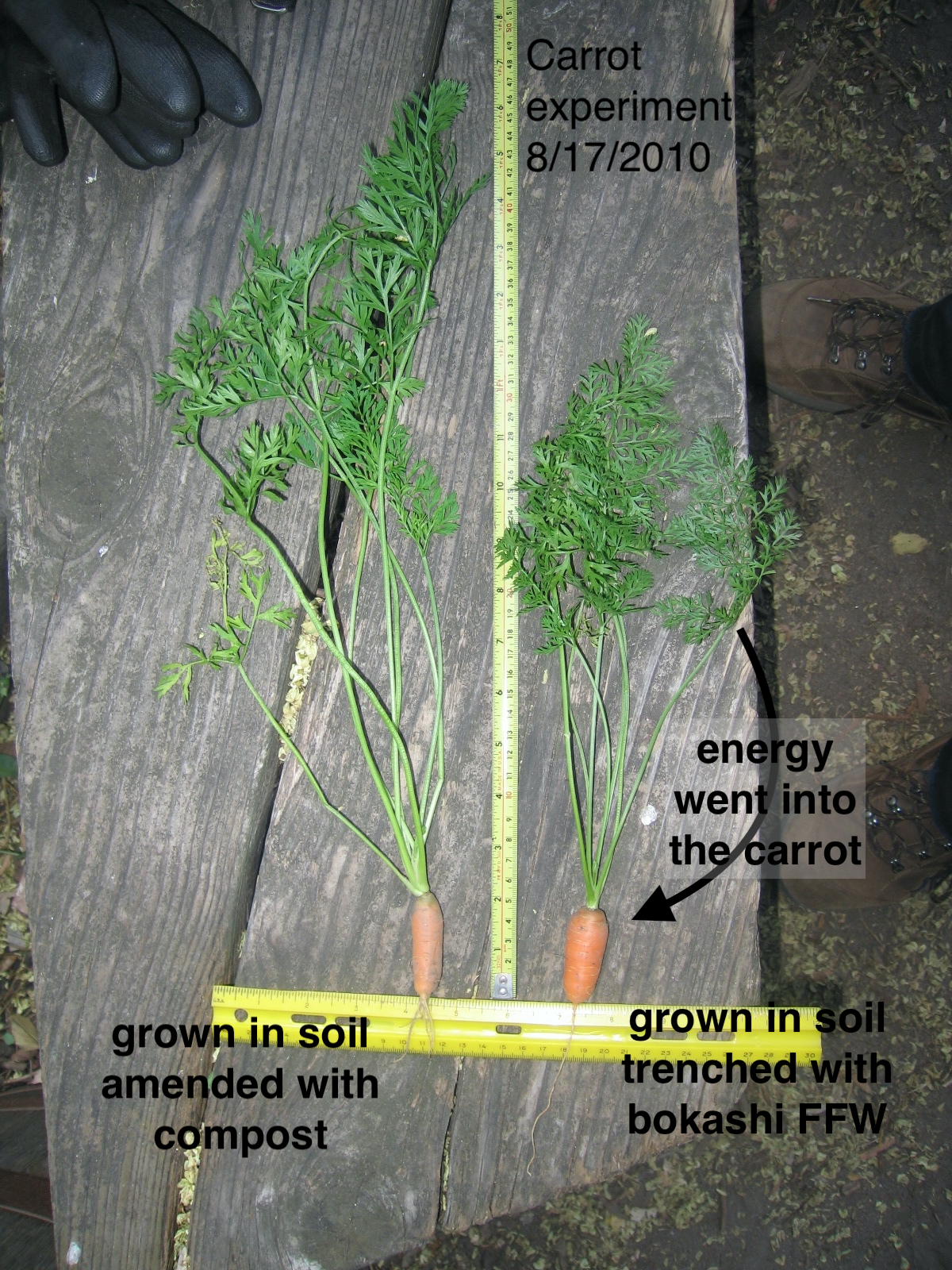
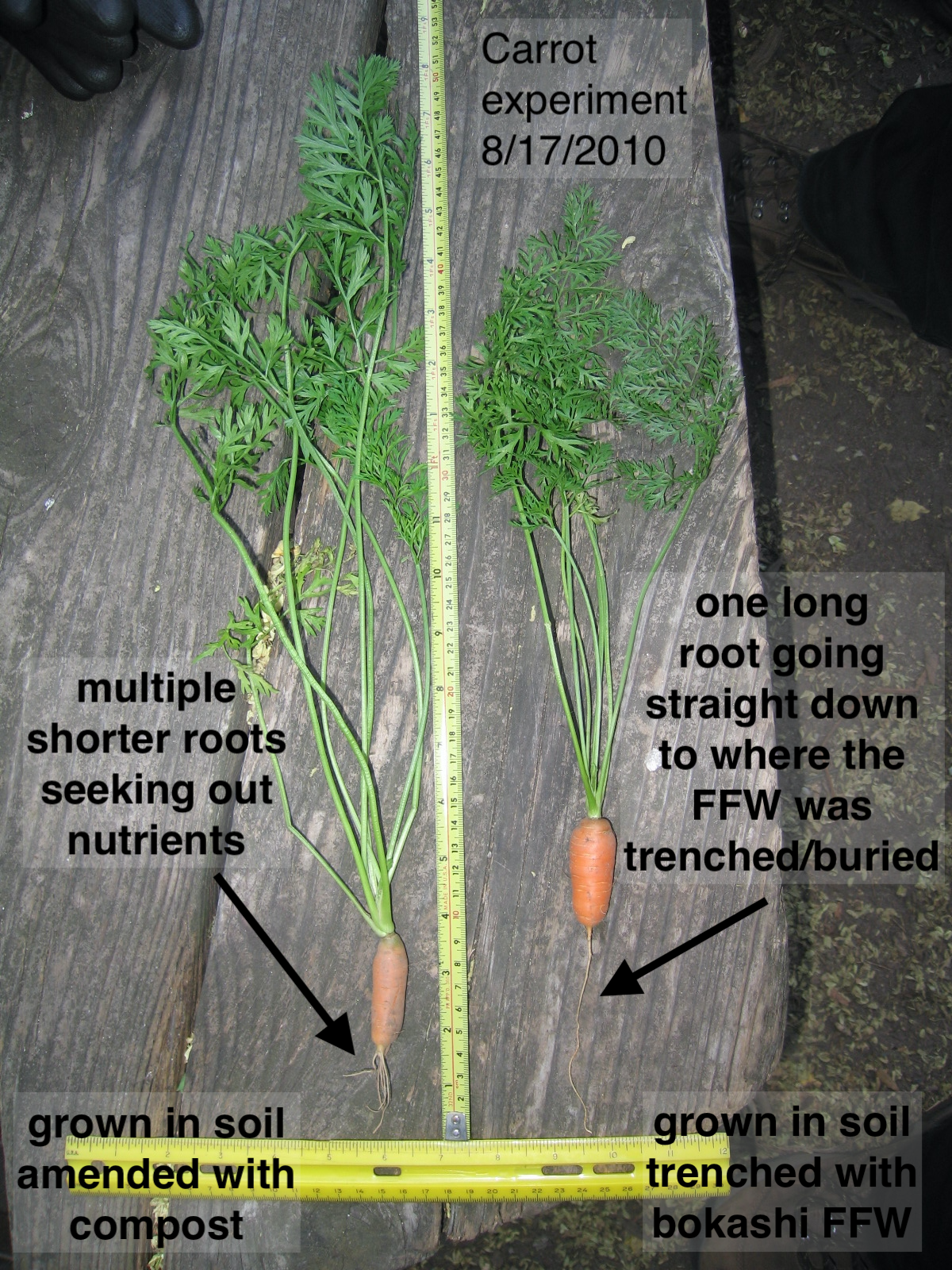
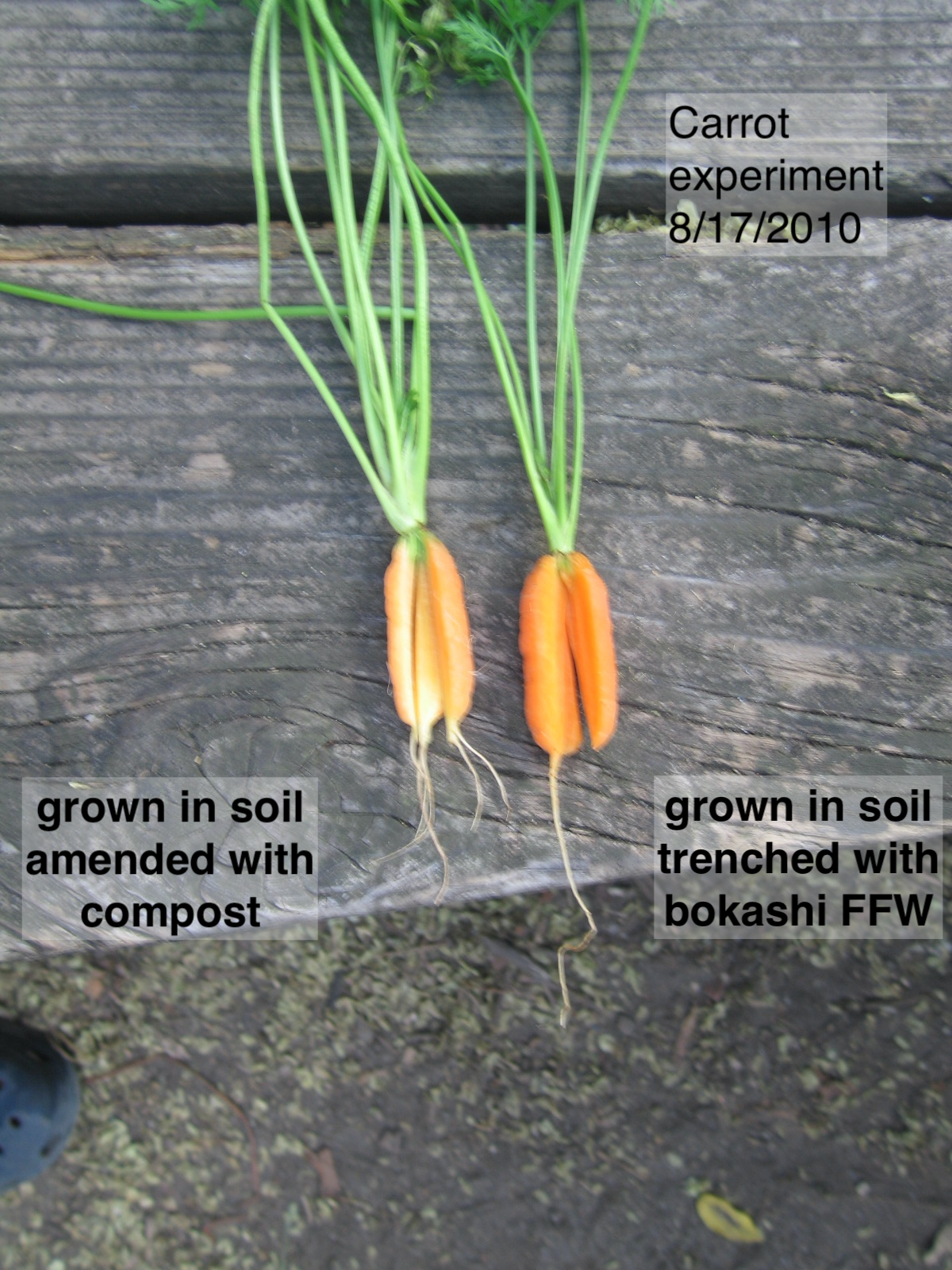
- Compared growing carrots and beets on regular compost and on fermented food waste (FFW).
FFW – shorter green top, rich orange color and sweeter.
Compost – taller greens, pale color, not as sweet. - Soil amendment comparison at a local high school. Kids built a thermophilic bin and compared fermented food waste soil amendment with thermophilic compost. It was sent to the best lab in the US. They said both soil amendments was of superior quality. The difference was that the kids worked very hard on the thermophilic compost and they touched the bokashi bucket a couple of times. The microbes did the work. They said 50 lbs could fertilize 1-2000 sq. feet.
- We tried to compared veggies grown on thermophilic vs fermented food waste to test the nutrient value of veggie. Unfortunately the buckets were outside and it rained too much and veggies did not do well. But we discovered when we emptied the buckets that the soil was darker and there were worms in the fermented food waste buckets. Thermophilic buckets were dry and lighter in color. Also we had done something new by mixing 2 parts sterile soil to 1 part fermented food waste and let sit for 2 weeks ( the other way was putting 1/3 soil in bottom of bucket then 1/3 fermented food waste and 1/3 soil on top).
- A volunteer brought some coffee chaff from her local roaster in Brooklyn. They were throwing it away. We made bokashi with it, and it worked very well. We then found other coffee roasters that we could go to pick up our free coffee chaff.
- Children’s Garden soil tests showing reduction of heavy metals.
There are 2 drop-off sites. The Children’s Garden is a 24/7 drop-off site. The gate is left ajar with a loose chain, so people can put their food waste in a rat proof bin. Volunteers help to transfer food waste into the 20-gal. airtight bins and inoculate with bokashi. El Sol Brillante has a drop-off only when members are there and the gate is open.
There is a bucket program. People get a 3 1/2-gal. bucket and bokashi so they can start fermenting their food waste in their kitchen. They bring their full bucket to either garden and empty into our 20-gal. bins and get more bokashi.
We are now recycling over 5 tons of food waste per year with about 5 rotating volunteers. All of the food waste comes from the community. We stopped taking food waste from the cafe years ago.
Most of the food waste has been buried in the Children’s Garden. In 2008, the soil was dead and contaminated with heavy metals. Now it is full of life, rich, and the lab results showed a reduction of heavy metals. We can use the soil amendment to nourish Sauer Park.
We are able to trench throughout the winter because the microbe-rich fermented food waste keeps the soil from freezing. The bags of leaves that we spread in the fall also help to soften the ground.
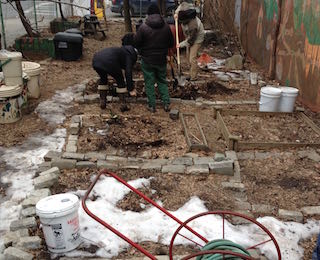
Because the soil at the Children’s Garden has improved so much we are ready to move on to other gardens that need soil restoration. This coming spring will be our 3rd year of trenching at Campos West (13th Street and Ave B, also known as the Relaxation Garden). The soil is very poor and there is a rat problem. We may be trenching for years to improve the soil.
The bokashi method of recycling food waste is low maintanance, low tech, and produces high quality soil amendment. The microorganisms do the work.
We applied for the Citizens Committee composting grant for $750. We thought if we are diverting so much food waste from the landfill this grant can help other gardens set up the bokashi method. There is now an itemized list of all the materials and cost needed to set up the bokashi system and is available for all the gardens to apply for the grant. Campos Community Garden (12th St. between Ave B and C) got the grant and other gardens have applied for the grant, as well.
We work with the master composters from the Lower East Side Ecology Center and Earth Matter NY, and we give free apprenticeship for the public.
We trained the founder of Common Ground Compost which is down the block. They are recycling 1 ton of food waste per month. Half of the food waste is processed with bokashi. Our long time volunteer who grew up in the garden is the first person to be employed doing food waste recycling.
If you are interested in a free tour of the bokashi model, garden workdays, or bokashi workshops, contact Shig at shig@recyclefoodwaste.org (or Susan until May 2021).
You are welcome to come to our bokashi get-togethers. We meet once a month. We share our stories, fermented drinks, and fermented foods. Please contact Shig at shig@recyclefoodwaste.org.
If you are interested in a free tour of the 12th Street Bokashi Model or an orientation to our bokashi process, please email greenfield12thst@yahoo.com.
For bokashi workshops, send email to shig@recyclefoodwaste.org.
For details on bokashi composting, visit recyclefoodwaste.org.